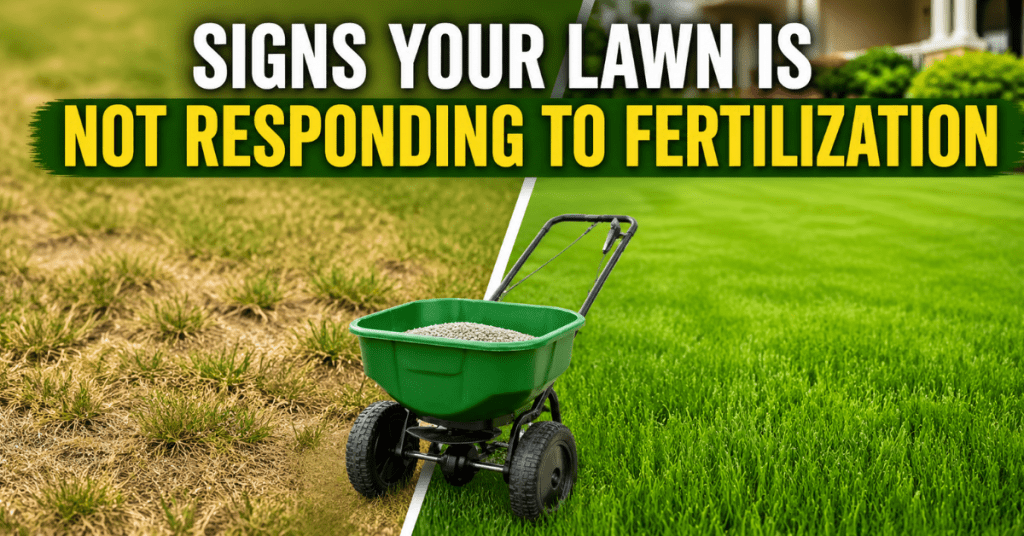
Signs your lawn is not responding to fertilization can be frustrating when you expect greener, thicker growth but see little to no improvement. If you are looking for signs your lawn is not responding to fertilization, we will help you identify what is going wrong and what needs to be fixed. Understanding these signs early allows us to correct the issue and restore healthy, consistent lawn growth.
Grass Stays Pale or Yellow
Color is one of the first indicators we look at.
A healthy lawn should turn a deeper green after fertilization. If it does not, there is an underlying issue.
→ Nutrients are not being absorbed properly
→ Soil pH may be unbalanced
→ Roots may be too weak to take in nutrients
This usually tells us the problem is in the soil, not the fertilizer itself.
Uneven Growth Across the Lawn
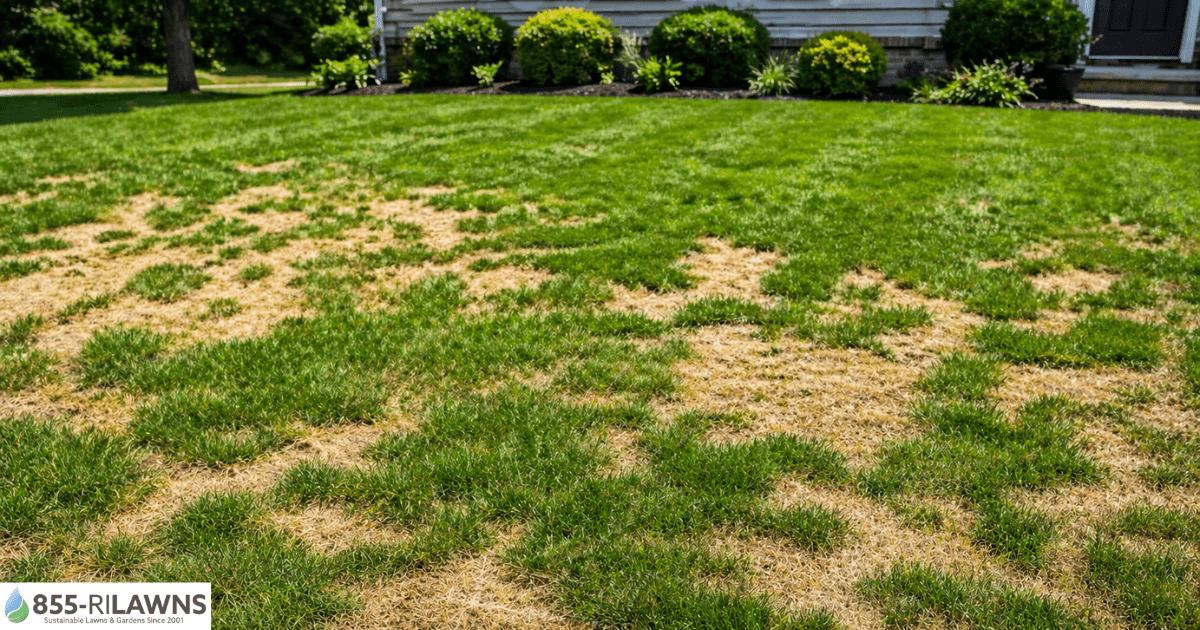
Fertilization should lead to even, consistent growth.
When we see uneven results, it often means something is interfering with nutrient distribution.
→ Patchy green and brown areas
→ Some sections grow faster than others
→ Thin and inconsistent turf
This often points to compacted soil or poor nutrient coverage across the lawn.
Fertilizer Seems to Do Nothing
Sometimes, fertilization produces no visible change.
→ No improvement in color
→ No increase in thickness
→ Lawn looks the same after weeks
Midway through your lawn care routine, this is one of the clearest signs that your lawn is not responding to fertilization. It usually indicates deeper problems, such as poor soil health or lack of aeration.
Weed Growth Increases Instead
When weeds grow faster than your grass, the lawn is not benefiting from fertilization.
→ Weeds spread quickly
→ Grass struggles to compete
→ Lawn becomes uneven over time
This happens when the turf is too weak to absorb nutrients effectively, allowing weeds to take advantage.
Soil Feels Hard and Compacted
Healthy lawns depend on soft, breathable soil.
When soil becomes compacted, fertilization cannot work properly.
→ Water stays on the surface
→ Soil feels hard to the touch
→ Roots remain shallow
Compacted soil blocks water, air, and nutrients from reaching the root zone.
Thatch Buildup Is Blocking Nutrients
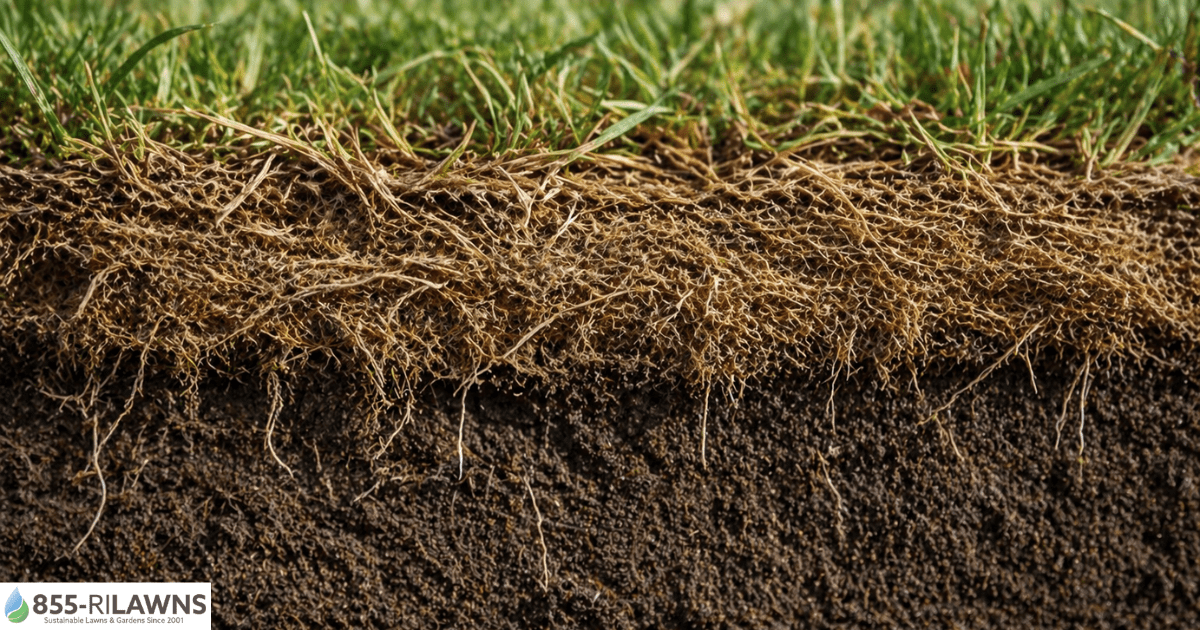
A thick layer of thatch can prevent fertilizer from reaching the soil.
→ Spongy layer between grass and soil
→ Increased water runoff
→ Limited nutrient penetration
Even high-quality fertilizer will not work if it cannot reach the roots.
Lawn Struggles During Heat or Drought
A properly fertilized lawn should be better able to withstand stress.
If it does not, the root system may be weak.
→ Grass turns brown quickly in the heat
→ Slow recovery after dry periods
→ Increased sensitivity to weather
This indicates that fertilization is not supporting long-term lawn health.
Pest or Grub Damage Appears
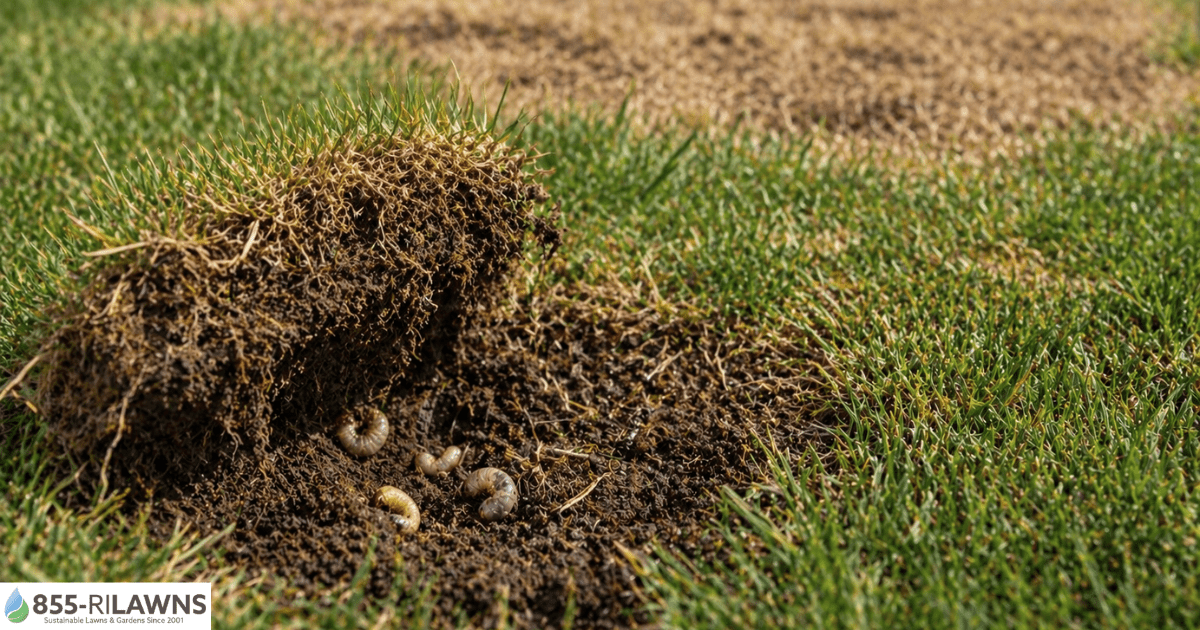
In some cases, the issue is not fertilization but root damage.
→ Brown patches that spread
→ Grass pulls up easily
→ Signs of insects in the soil
Damaged roots cannot absorb nutrients, making fertilization ineffective.
Why Proper Fertilization Still Fails Without a System
Fertilization alone is not enough. Timing, soil condition, and consistency all play a role in how your lawn responds.
At 855-RILAWNS, we follow a structured, organic-based 6-step fertilizing program designed to support your lawn throughout the entire season.
→ Early spring applications help lawns recover from winter
→ Late spring treatments include nutrient support and grub control
→ Early summer applications improve color and growth
→ Summer treatments protect against heat and drought
→ Fall applications improve soil quality and nutrient uptake
→ Winter preparation strengthens roots for the next season
We also improve results with additional services:
→ Soil testing to identify exact nutrient needs
→ Core aeration to reduce compaction and improve absorption
→ Dethatching to allow nutrients to reach the root zone
This approach ensures fertilization works effectively and delivers consistent results.
Final Thoughts
If we notice signs that your lawn is not responding to fertilization, the issue is usually deeper than the fertilizer itself. Fixing soil health, root strength, and timing will restore proper growth.
Call 855-RILAWNS at 855-745-2967 for a lawn assessment that delivers real results.
Follow us on Facebook for updates, tips, and seasonal lawn care reminders