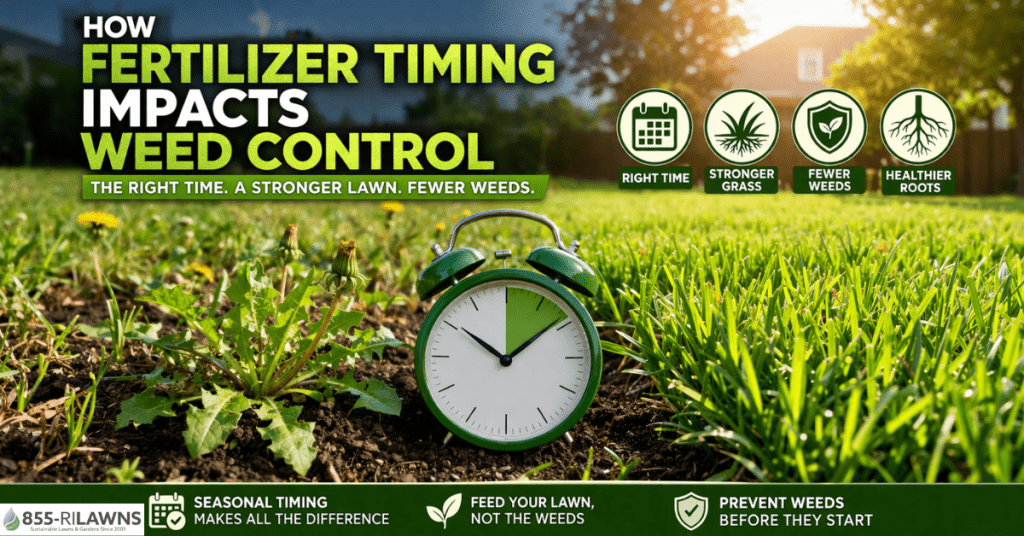
Fertilizer Timing Impacts Weed Control more than most homeowners realize. Many apply fertilizer expecting quick results, but end up feeding weeds instead of grass. The difference comes down to when we apply it. Done right, fertilizer strengthens the lawn and prevents weed growth naturally. Done wrong, it creates the perfect conditions for weeds to thrive.
In this guide, we break down exactly how timing impacts results and what to do differently.
Why Timing Matters More Than the Fertilizer Itself
Most homeowners think fertilizer equals a green lawn. But here is what actually happens:
→ Fertilizer feeds whatever is actively growing
→ If weeds are active, they benefit first
→ If the lawn is not ready, nutrients go to waste
That means poor timing does not just reduce results. It can make the weed problem worse.
Our goal is not just to feed the lawn. It is feeding it at the right growth stage, so it becomes dense enough to naturally block weeds.
The Link Between Fertilizer and Weed Growth
Weeds thrive in weak, thin lawns.
When the lawn lacks nutrients:
→ Grass grows slowly
→ Bare patches appear
→ Weed seeds get space to grow
Now, here is what changes everything.
When we fertilize at the correct time, the lawn grows thicker and stronger. This creates natural competition, leaving no room for weeds to establish. But if timing is off, fertilizer does the opposite. It fuels weed growth, strengthens invasive species like crabgrass, and leads to patchy results. That is why understanding how fertilizer timing impacts weed control is critical for long-term results.
Best Fertilizer Timing for Weed Control
To control weeds effectively, fertilization should follow a structured seasonal plan.
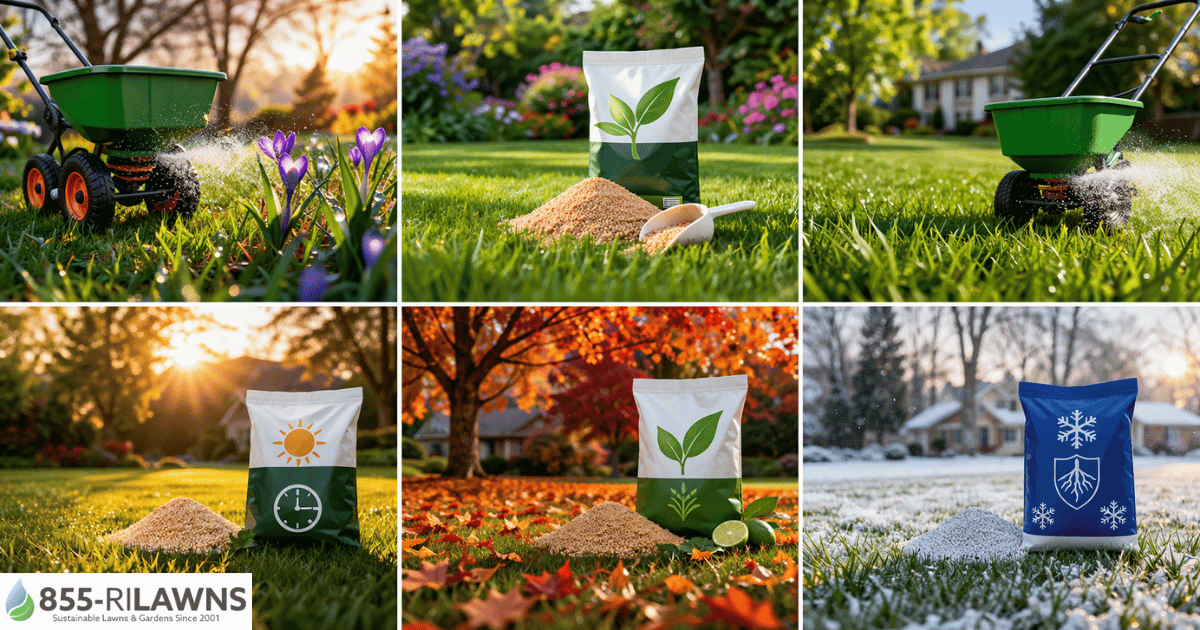
Early Spring (Prevention Stage)
→ We apply fertilizer with crabgrass pre-emergent
→ Stops weeds before they germinate
→ Helps the lawn recover from winter
This is the most important step for preventing weed problems early.
Late Spring (Strength Building)
→ We apply bio-infused fertilizer with grub control
→ Strengthens the lawn before summer
→ Prevents insects that weaken grass
A stronger lawn naturally resists weeds.
Early Summer (Consistency Phase)
→ Balanced fertilizer keeps growth steady
→ Maintains lawn thickness
→ Prevents mid-season weed outbreaks
Skipping this phase often leads to visible weed issues later.
Summer (Protection Phase)
→ Slow-release fertilizer protects against heat stress
→ Supports steady nutrient absorption
→ Helps the lawn survive harsh conditions
Weeds thrive in stressed lawns. This step helps prevent that.
Fall (Recovery and Soil Health)
→ Fertilizer with lime restores nutrients
→ Improves soil quality and pH
→ Strengthens root systems
Healthy soil reduces weed growth long-term.
Winter Prep (Future Protection)
→ Winter fertilizer prepares the lawn for dormancy
→ Strengthens roots for spring growth
→ Reduces weed pressure in the next season
Strong roots mean fewer weeds later.
Common Fertilizing Mistakes That Lead to Weeds
Even with the right product, small mistakes can ruin results:
→ Fertilizing too early when the soil is still cold
→ Skipping pre-emergent treatments
→ Over-fertilizing, causing uneven growth
→ Ignoring soil conditions and pH levels
→ Applying fertilizer over debris
One of the most common problems is skipping lawn preparation.
If leaves, debris, and thatch are still covering the lawn:
→ Fertilizer cannot reach the soil
→ Nutrients get blocked
→ Weed seeds remain protected
This leads to poor results, no matter how good the fertilizer is.
Why Lawn Preparation Matters Before Fertilizing
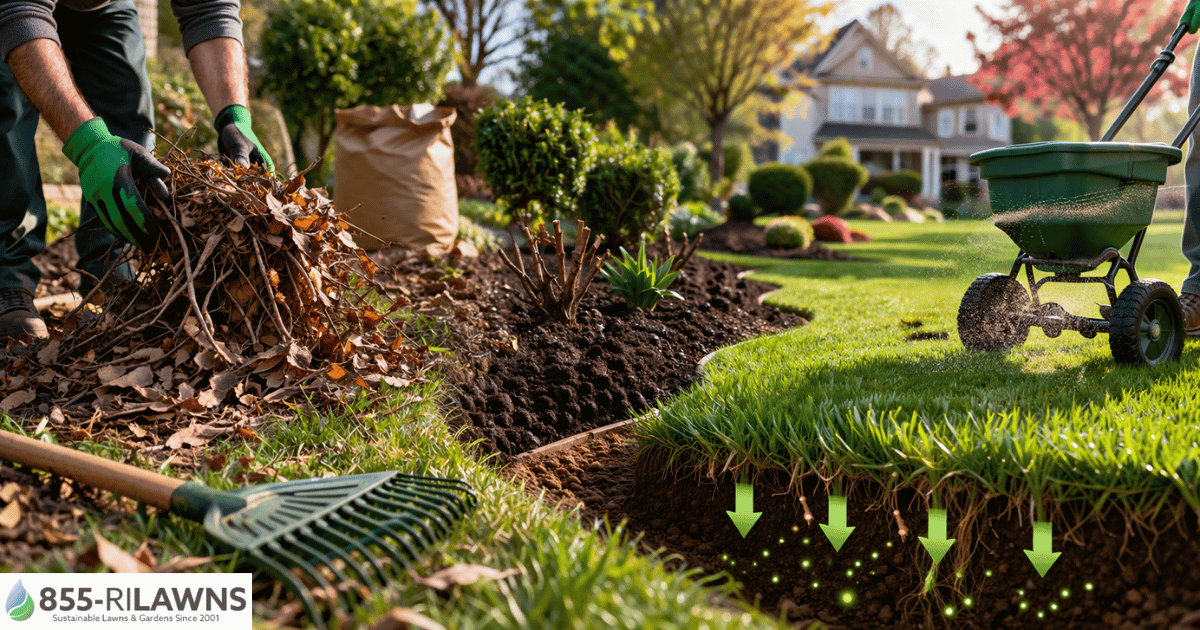
Before applying fertilizer, we need to make sure the lawn is ready.
That includes:
→ Removing leaves, branches, and debris
→ Clearing landscape beds
→ Cutting back old growth
→ Exposing soil for proper nutrient absorption
Without proper preparation, fertilizer sits on the surface and becomes ineffective.
This is where most homeowners go wrong. They focus on feeding the lawn but ignore preparing it.
Our Spring Cleanup + Fertilizing Approach at 855-RILAWNS
At 855-RILAWNS, we focus on both preparation and timing to deliver real results.
Our spring cleanup includes:
→ Removal of winter debris across the property
→ Clearing landscape beds for soil exposure
→ Cutting back non-woody perennials
→ Complimentary mowing for a clean finish
Once the lawn is ready, we follow a proven 6-step organic-based fertilizing program:
→ Early spring application with crabgrass prevention
→ Late spring fertilizer with grub control
→ Seasonal treatments to strengthen and protect the lawn
→ Fall and winter applications for long-term health
We also provide:
→ Soil testing to ensure precise nutrient application
→ Aeration to improve nutrient penetration
→ Eco-friendly treatments are safe for kids and pets
Most companies only apply fertilizer.
We make sure the lawn is fully prepared to benefit from it.
Final Thoughts
Fertilizer Timing Impacts Weed Control more than most realize. When we get the timing right, the lawn grows thicker and naturally blocks weeds. When we do not, we end up feeding them instead. The difference comes down to preparation, consistency, and a proper seasonal plan.
For reliable results, call 855-RILAWNS at 855-745-2967 or visit our Instagram for updates and easy booking.