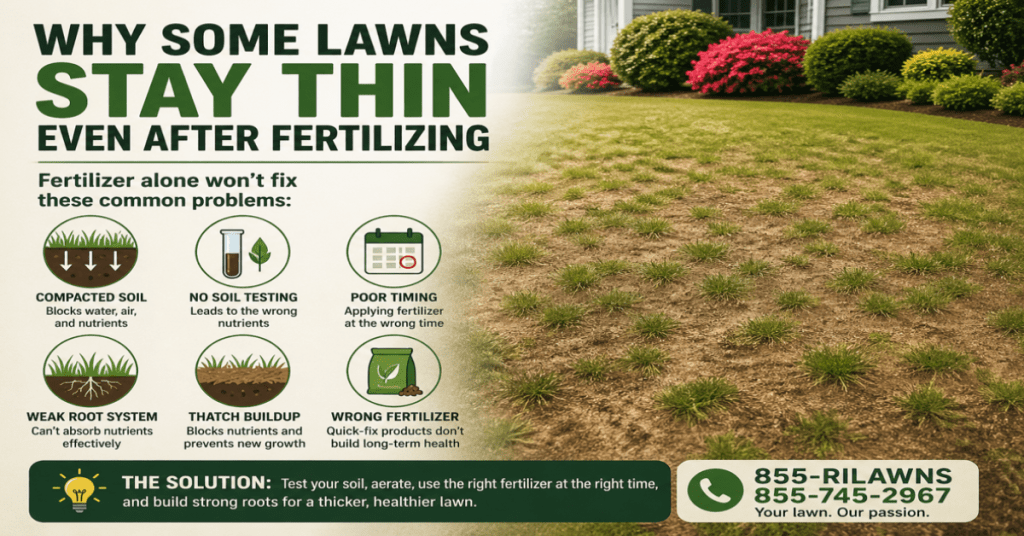
If you’re looking for why some lawns stay thin even after fertilizing, you’re not alone. Many homeowners expect a thick, green lawn after applying fertilizer, but instead see patchy, weak grass. The truth is, fertilizer alone does not fix deeper lawn issues. From compacted soil to poor timing and missing nutrients, several factors can block real growth. Understanding these problems is the key to turning a thin lawn into a healthy, dense one.
The Real Reason Your Lawn Isn’t Thickening
Fertilizer feeds your lawn, but only if your lawn can absorb and use those nutrients.
Here’s what often happens:
→ Nutrients sit on the surface instead of reaching roots
→ Soil conditions prevent proper absorption
→ Grassroots are too weak to respond
Even with regular fertilization, lawns may still struggle to thicken because their root systems are not functioning properly.
Compacted Soil Blocks Growth
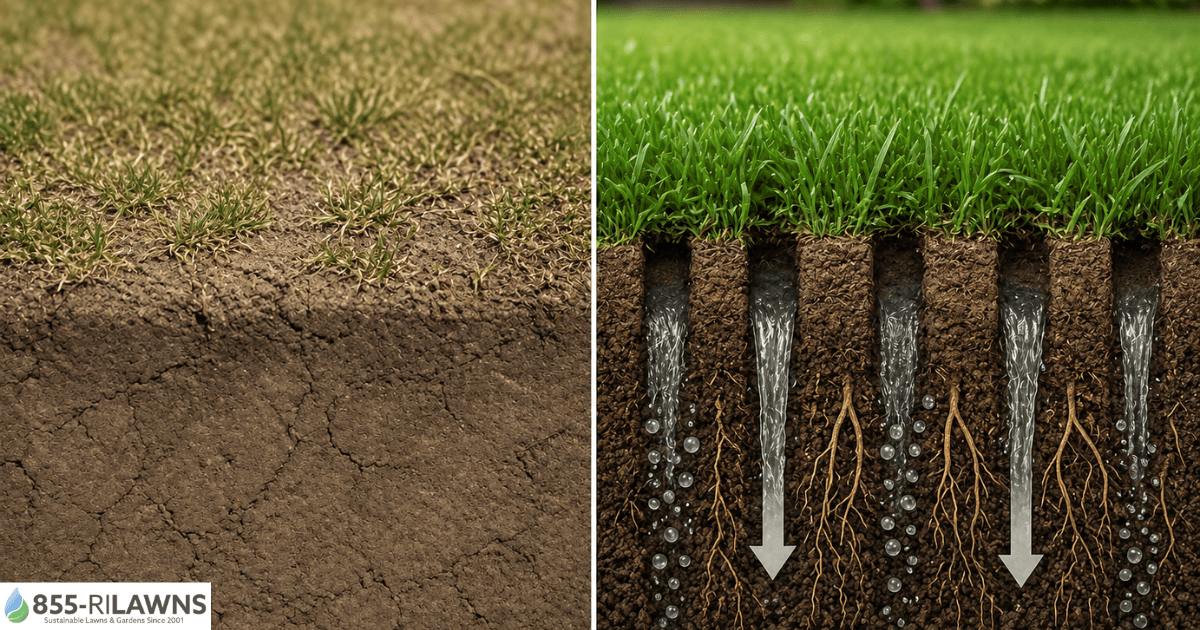
Soil compaction is one of the most common reasons lawns stay thin.
When soil becomes packed:
→ Water cannot penetrate properly
→ Oxygen cannot reach the roots
→ Fertilizer remains on the surface
This leads to shallow roots and weak grass.
Solution: Core aeration
We recommend aeration because it loosens the soil and allows water, air, and nutrients to reach the root zone where real growth happens.
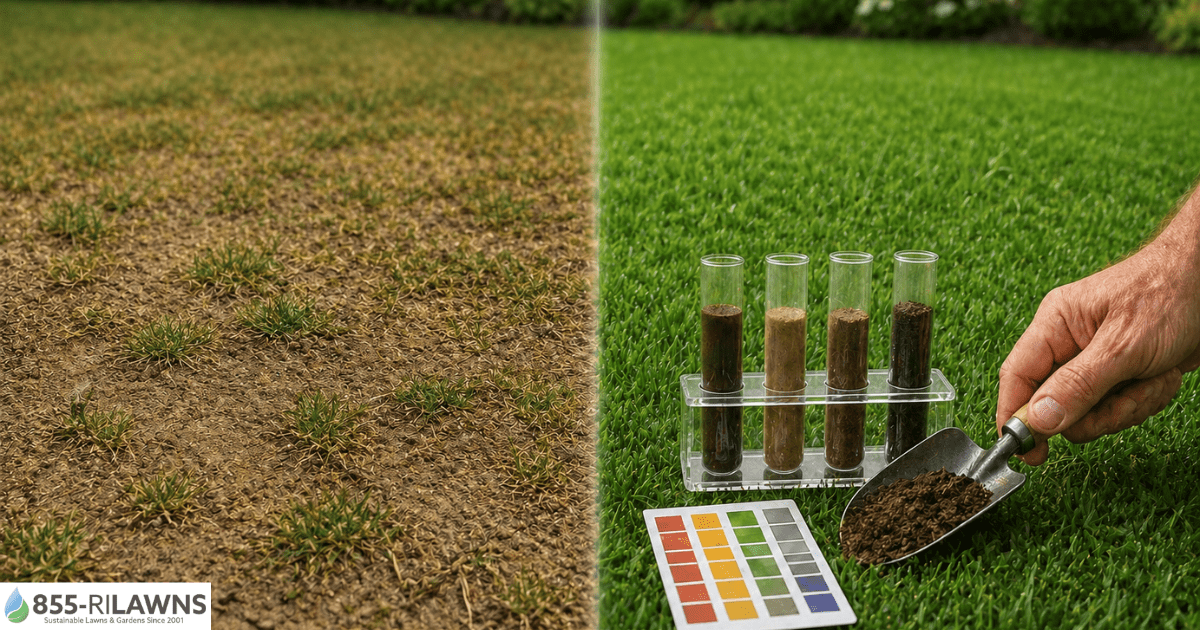
No Soil Testing Means Guesswork
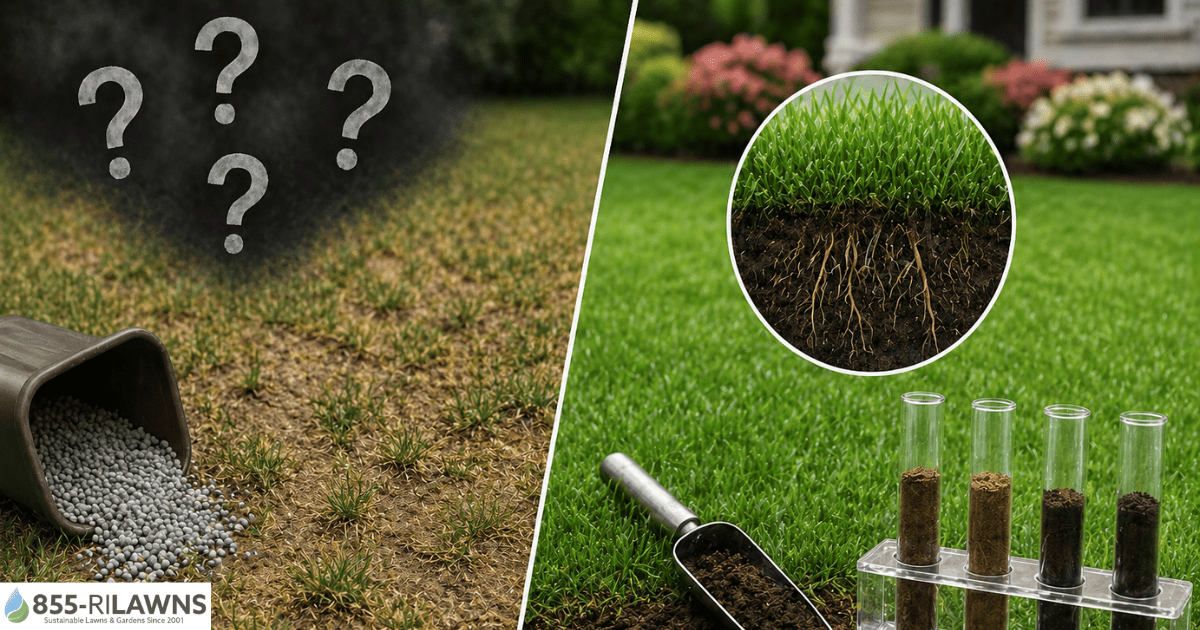
Many lawns stay thin because they are not getting the right nutrients.
Without soil testing, you do not know:
→ What nutrients does your soil lack
→ Whether pH levels are balanced
→ If you are applying too much or too little fertilizer
This is a major reason why some lawns stay thin even after fertilizing. The wrong nutrients will not solve the problem.
Solution: Soil testing and targeted applications based on real results.
Poor Timing Reduces Results
Fertilizing at the wrong time limits effectiveness.
Common issues include:
→ Applying fertilizer when the soil is still cold
→ Missing key seasonal applications
→ Not feeding during stress periods like summer or fall
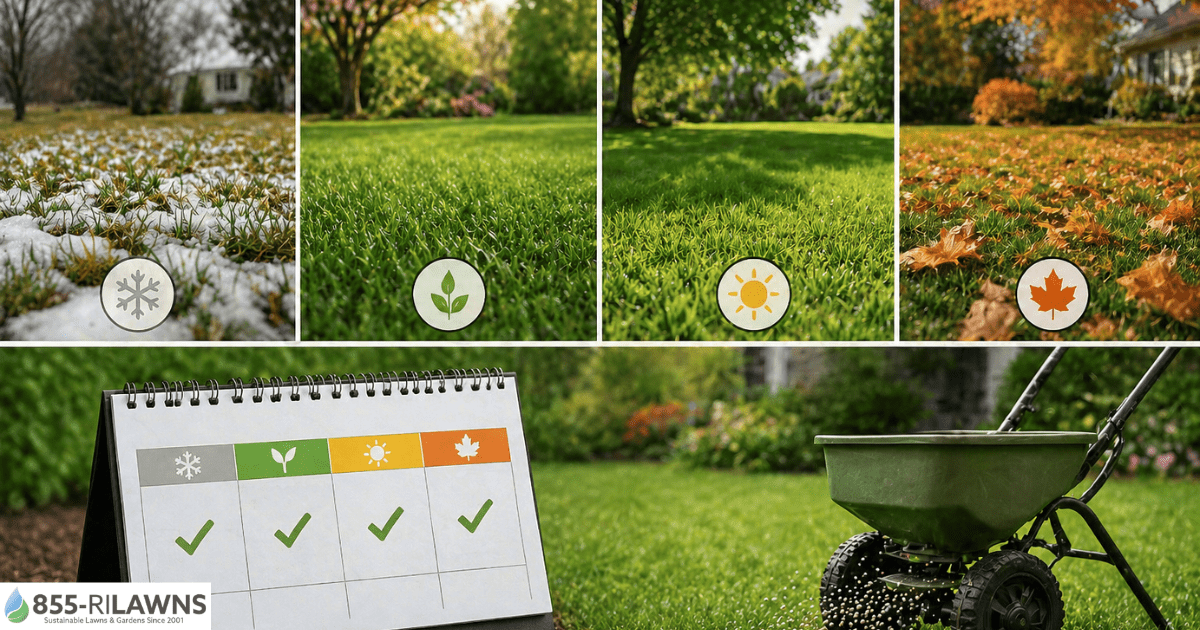
Grass grows in cycles. If you miss those cycles, results will be limited.
Solution: Follow a structured fertilization schedule throughout the year.
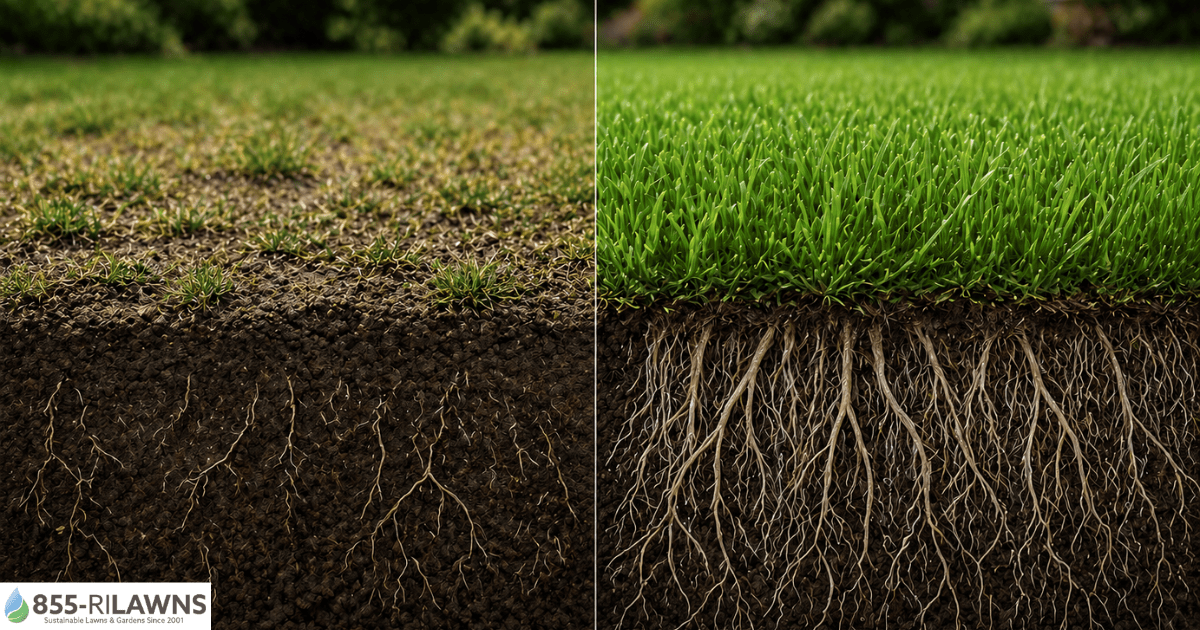
Weak Roots Lead to Thin Grass
A thick lawn starts below the surface.
When roots are weak:
→ Nutrients are not absorbed efficiently
→ Growth slows down
→ Grass becomes thin and uneven
Even high-quality fertilizer cannot fix a weak root system.
Solution: Focus on root health through aeration, proper watering, and consistent feeding.
Thatch Buildup Prevents Growth
Thatch is a layer of dead organic material that builds up over time.
Too much thatch:
→ Blocks water and nutrients from reaching the soil
→ Encourages pests and disease
→ Prevents new grass from growing
Even with fertilizing, lawns remain thin because nutrients cannot penetrate.
Solution: Dethatching and aeration to open up the lawn.
Choosing the Right Fertilizer Matters
Not all fertilizers deliver long-term results.
Quick-release fertilizers:
→ Provide fast green color
→ Wear off quickly
→ Do not improve soil health
Organic-based, slow-release fertilizers:
→ Feed the lawn over time
→ Improve soil structure
→ Support deeper root growth
Choosing the right approach is essential for long-term thickness.
Our Approach to Building Thicker Lawns
At 855-RILAWNS, we focus on long-term lawn health, not quick fixes.
Our organic-based 6-step fertilizing program is designed to support your lawn throughout the entire season:
→ Early spring application with crabgrass prevention
→ Late spring feeding with grub control
→ Early summer nutrient boost
→ Summer protection with slow-release fertilizer
→ Fall feeding with lime to improve soil quality
→ Winter preparation for a stronger spring recovery
We also recommend:
→ Core aeration to reduce compaction
→ Soil testing for accurate nutrient application
→ Overseeding to fill in thin areas
This complete approach ensures your lawn improves from the roots up.
Final Thoughts
Why some lawns stay thin even after fertilizing comes down to more than nutrients alone. When soil, timing, and root health are addressed together, lawns grow thicker and stronger.
Call 855-RILAWNS at 855-745-2967 to get started with a lawn care plan that delivers real results.
Follow us on Facebook for updates.