
Why Winter Debris Hurts Spring Lawn Health is something every homeowner should understand before the growing season begins. If you are looking for why winter debris hurts spring lawn health, the answer directly affects how thick, green, and healthy your lawn becomes in spring. What sits on your property all winter does not simply disappear. It creates hidden stress that delays growth, increases disease risk, and weakens your turf before it has a chance to thrive.
What Happens to Your Lawn During Winter?
During winter, lawns enter dormancy. While growth slows, the root system remains alive beneath the surface. When leaves, branches, and organic debris accumulate for months, they form a dense layer that traps moisture and blocks sunlight.
That buildup leads to:
- Matted, compacted turf
- Reduced airflow
- Excess surface moisture
- Increased fungal risk
- Weak early-season growth
Why Winter Debris Creates Long-Term Damage
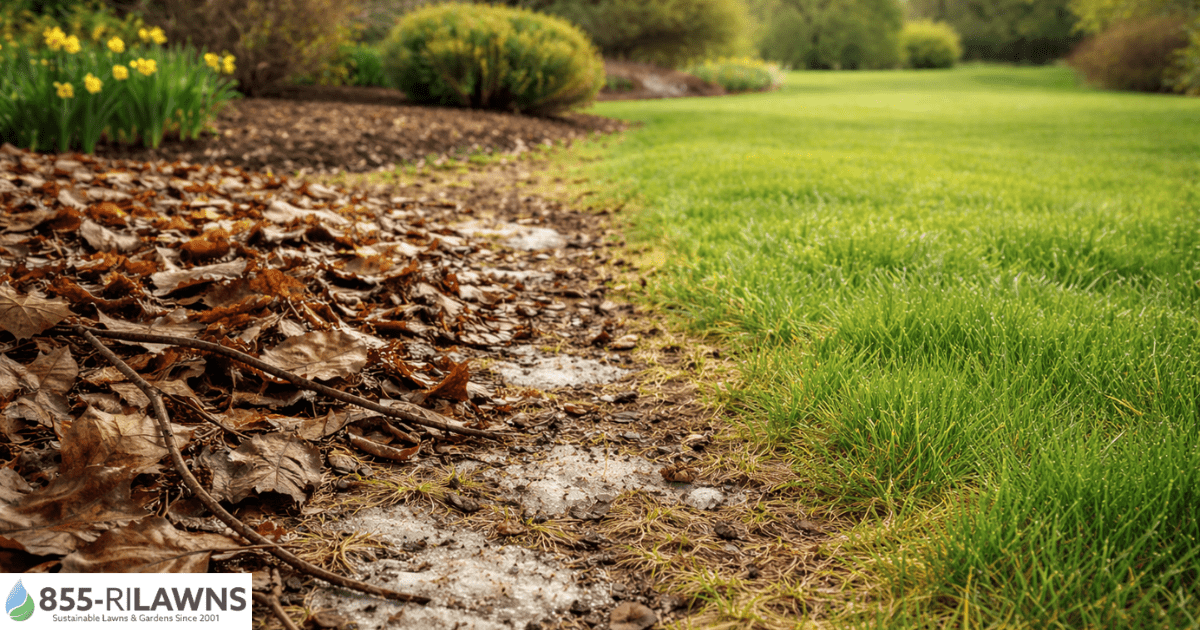
Debris may seem harmless, but the impact goes deeper than most homeowners realize.
It Blocks Sunlight
As spring temperatures warm, grass needs sunlight immediately to restart active growth. Debris prevents light from reaching the soil surface, delaying green-up and weakening development.
It Traps Moisture
Compacted leaves hold moisture against the turf. This creates the perfect environment for snow mold and other fungal diseases to develop and spread quickly.
It Suppresses New Growth
Grass that remains pinned down under debris struggles to stand upright again. The result is thinning patches and uneven turf density across your property.
This is exactly why winter debris hurts spring lawn health. The damage begins long before visible symptoms appear.
The Cost of Skipping Spring Cleanup
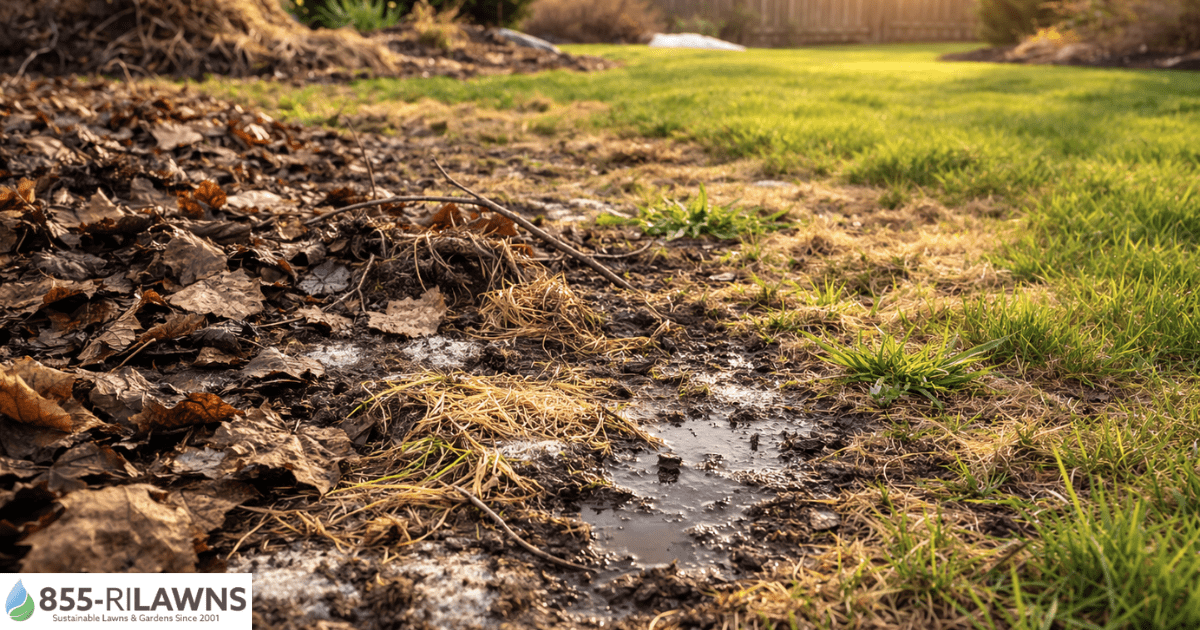
Leaving debris in place can cause:
- Uneven greening
- Increased weed growth
- Thinner turf
- Higher fertilization needs
- Overseeding requirements
What could have been routine seasonal maintenance turns into corrective lawn repair. Preventative cleanup is far more efficient and cost-effective than restoration work later in the season.
Why Timing Makes a Difference
Spring cleanup is not only about removal. It is about timing.
In Rhode Island, early cleanup from March 1 to April 14 allows us to clear winter buildup before rapid growth begins. Late cleanup from April 15 to June 20 works well for properties where snow lingers, or perennials require later trimming.
Acting at the correct time allows proper airflow, sunlight penetration, and soil drying. This sets the lawn up for strong spring development.
Why Winter Debris Hurts Spring Lawn Health and How to Prevent It
The solution is simple. Remove the buildup thoroughly.
Clearing leaves, sticks, and accumulated debris restores oxygen flow and light exposure. Cutting back non-woody perennials prevents decay and encourages healthier regrowth. Complimentary mowing helps stimulate even, fresh turf development.
Most companies only remove sticks and leaves. A complete cleanup addresses the entire property, including lawn surfaces and landscape beds, so nothing is left behind to create problems later.
Our Spring Cleanup Services in Rhode Island
At 855-RILAWNS, we design our spring cleanup services to give your property a strong start to the season.
Our spring cleanup service includes:
- Removal of leaves, branches, and winter debris
- Landscape bed cleanup
- Cutting back non-woody perennials
- Complimentary mowing
- Debris hauling or relocation to a designated area
We also offer our You Rake Em, We Take Em leaf removal service. Place leaf piles within 10 feet of the curb, and we will vacuum and haul them away.
Final Thoughts
Why winter debris hurts spring lawn health comes down to trapped moisture, blocked sunlight, and weakened turf. Removing debris early helps your lawn green up evenly and grow stronger all season.
Call 855-RILAWNS at 855-745-2967 to schedule your spring cleanup today.👉 Visit our Facebook for updates and easy booking